
An Iconic San Francisco Wedding at Mission Dolores & Fort Mason
Getting Ready at Home, Then a Walk to the Basilica
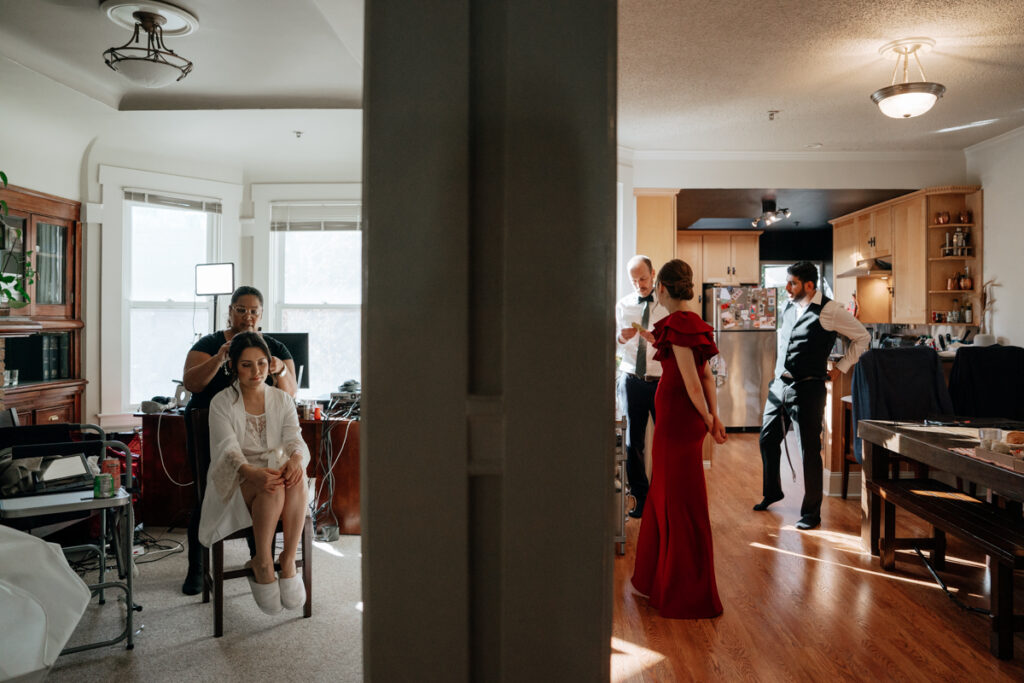
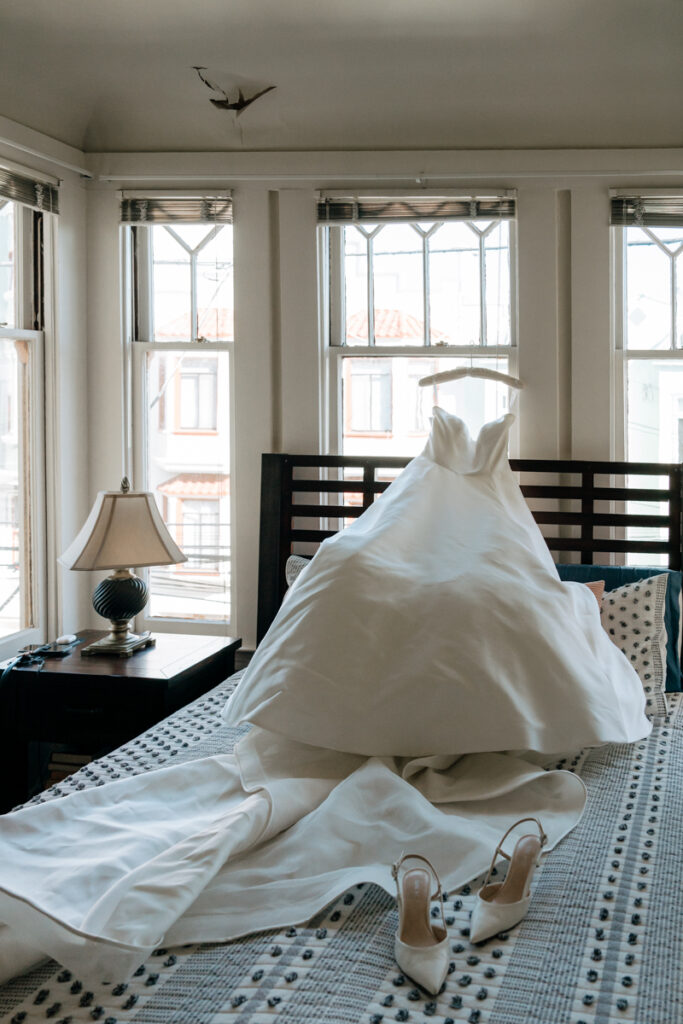
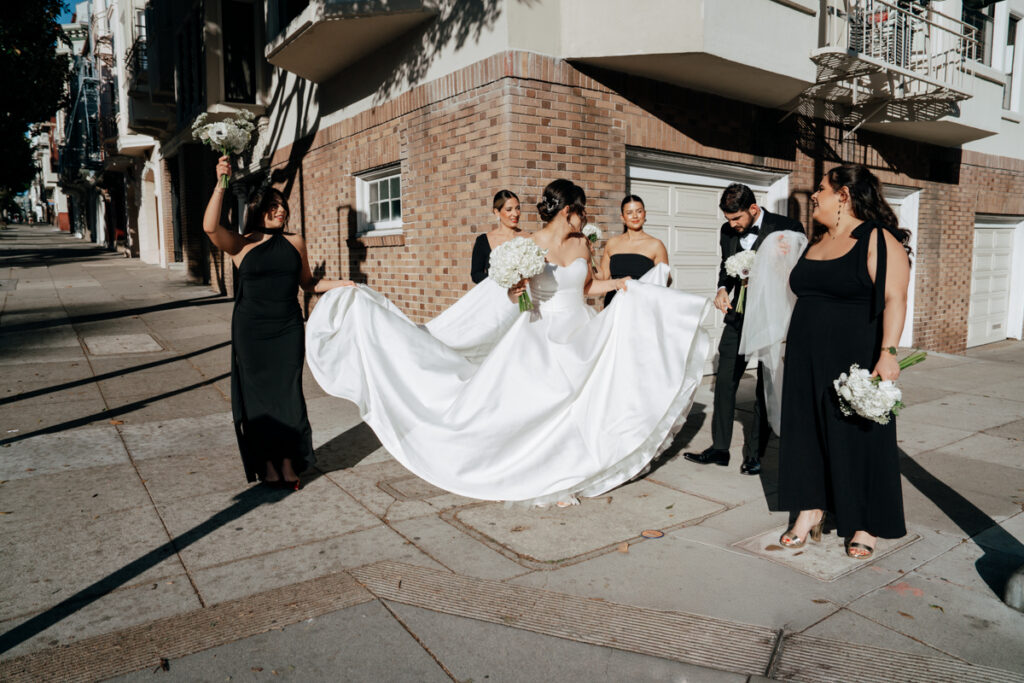
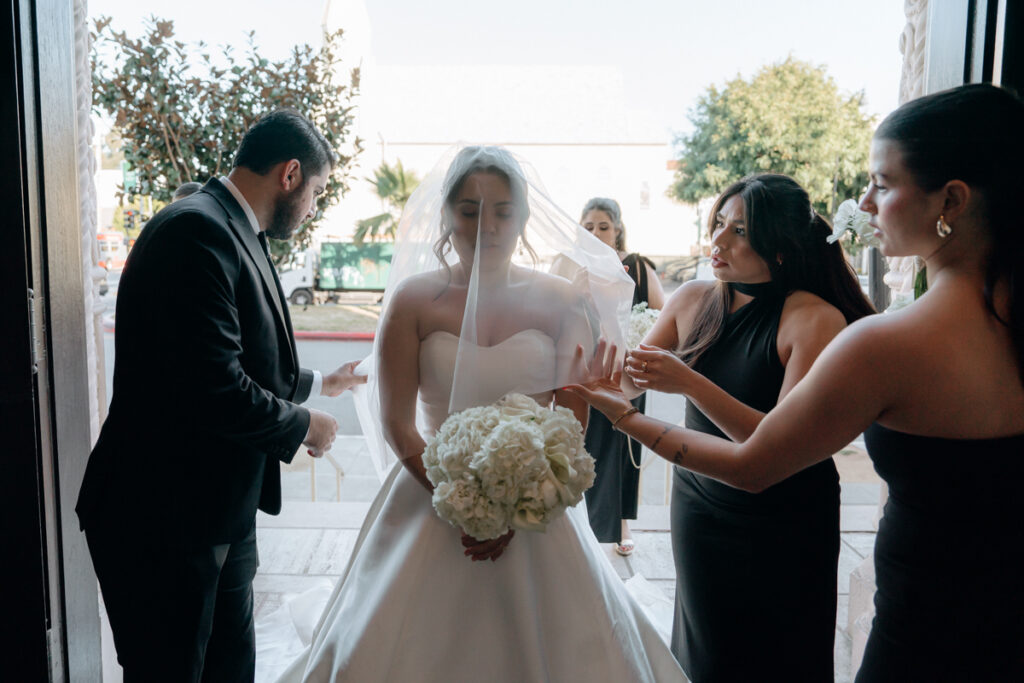
What’s more iconic than a wedding at Fort Mason? For this couple, it was something quieter than the view. It was the subtle flex of having grown up in San Francisco, of knowing this city so well that they could actually walk to their own ceremony. They got ready at their own family homes, each just a few blocks from Mission Dolores, no shuttle, no hotel suite, just their own neighborhood on the way to go get married.
I stayed with the bride. My second shooter went with the groom. Each of them had their own energy on that walk, their own pace, their own quiet, two separate versions of the same nerves and excitement, before it all came together at the church. San Francisco is a city with unexpected beauty tucked into its corners, you just have to follow it and listen, and that walk was one of those corners.
From there, the day moved to Fort Mason Center’s General’s Residence for the reception, a historic, recently renovated building with views out over Aquatic Park and Alcatraz. Two very different settings, a walk through a home neighborhood and a 19th-century mission on one end, a grand residence on the water on the other, and both photographed the same way: documentary coverage, paying attention rather than staging.

Mission Dolores Basilica: A San Francisco Wedding Ceremony Staple
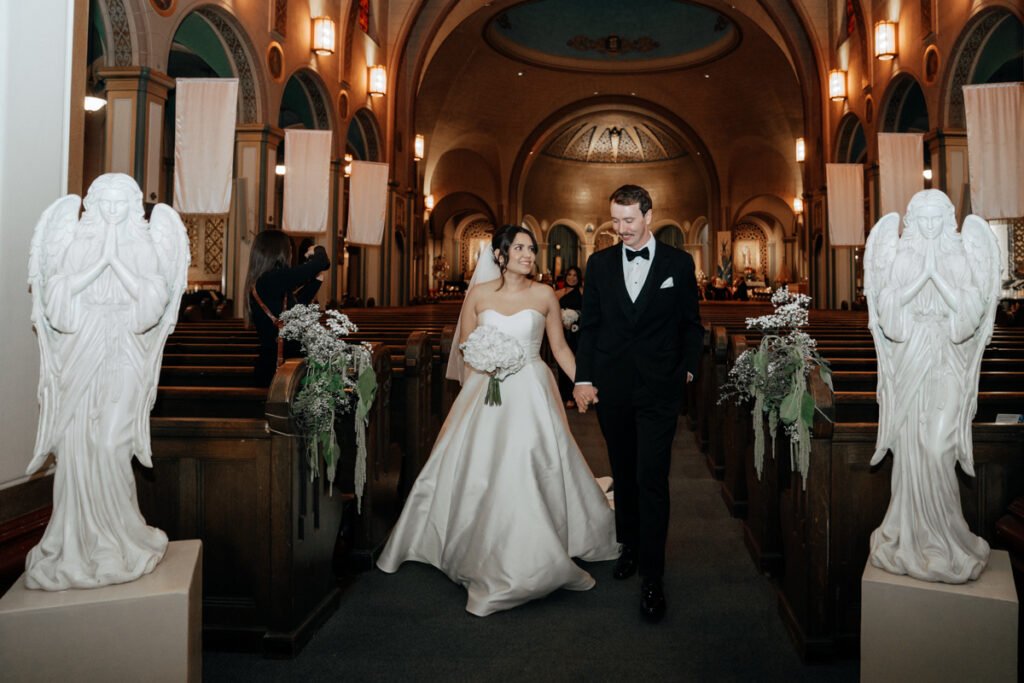
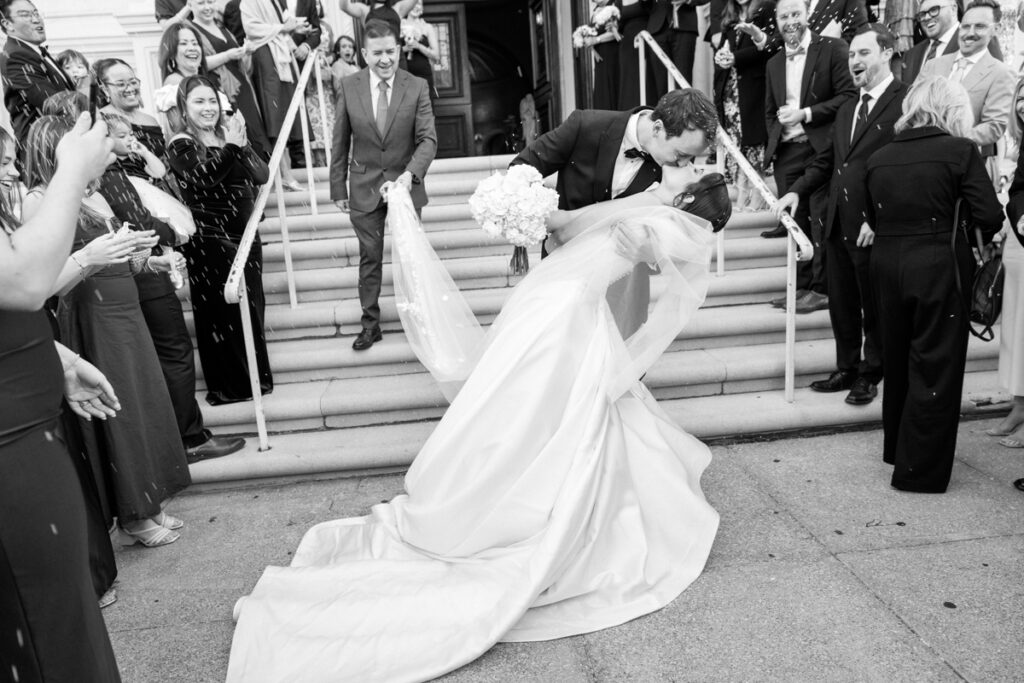
Mission Dolores Basilica, at 3321 16th Street, is one of San Francisco’s most recognizable wedding ceremony sites, and it comes with real layered history worth getting right. The small adobe Mission chapel next door to the Basilica was founded in 1776 and is genuinely the oldest surviving building in San Francisco. The Basilica itself, the larger church where ceremonies actually take place, is a separate, newer building completed in 1918, rebuilt after the 1906 earthquake destroyed the brick church that previously stood on the site. Both buildings sit on the same grounds, and both are worth a quiet moment before the day gets going.
Flash photography is typically restricted during the ceremony itself, and access to the altar is limited, confirm exact rules directly with the parish when you book. With the right lenses and a documentary approach, none of that gets in the way of covering the ceremony well.
Couples marrying at the Basilica should expect a marriage preparation process, typically 6 months to 1 year, through the parish. Contact the rectory directly at (415) 621-8203 for current requirements and to confirm capacity for your guest count.




Fort Mason’s General’s Residence: A Reception With History and a View
The General’s Residence sits inside Fort Mason Center, a historic, recently renovated building with a genuinely different feel from a typical event space, a ballroom, dining room, and lounge inside, a rear lawn outside, and views out over Aquatic Park and Alcatraz that change with the light through the evening.
Third-party venue listings put the space at up to 400 guests, seated or standing, across 4,955 square feet, with a separate room (the Funston Room) that works well as a bridal suite, plus in-house catering and A/V equipment available. Confirm exact capacity for your date and layout directly with Fort Mason, and confirm current outside-catering and alcohol policy too, since it can vary by space within the center.
Confirm current rental rates directly with Fort Mason Center’s events team, pricing depends on date, season, and which space you book, and isn’t published.
Can You Host a Ceremony at Fort Mason?
Yes, several Fort Mason spaces, including the General’s Residence, can host both ceremony and reception if you’d rather keep the whole day in one place instead of moving between two landmarks the way this couple did. Confirm which specific space fits a ceremony layout for your guest count when you inquire with the venue.


Planning a Wedding in San Francisco? Consider These Logistics
Weather: May through August tends to bring the city’s fog season, cooler and more overcast, especially near the water. September and October generally offer the most reliable clear weather for outdoor portraits and time on the rear lawn.
Timing: January through March tends to be quieter for bookings, which can mean more schedule flexibility, though confirm current rates and availability directly with each venue.
Getting around: Vintage cars, Muni, and private trolleys are all realistic options for moving a wedding party and guests between two SF locations in one day, worth building real transit time into the timeline given city traffic.
Two venues, one day: if you’re doing a two-location wedding like this one, build in more buffer time than feels necessary between the ceremony and reception. San Francisco traffic and parking don’t leave much room for a tight turnaround.
Why Choose Documentary Wedding Photography for a City Wedding
A two-landmark San Francisco wedding day moves fast, church to car to reception, and a lot happens in the transitions that a fully posed approach would miss entirely. Documentary coverage means I’m paying attention the whole time, not just during the moments that were planned to be photographed.
I’m not building your day around getting photos. I’m in it with you, quietly, and I step in only when it actually helps, a few minutes of direction for portraits if you want them, and then the rest of the day stays yours.
Frequently Asked Questions
How many guests can the General’s Residence at Fort Mason hold? Third-party venue listings put it at up to 400 guests, seated or standing, across 4,955 square feet. Confirm exact capacity for your date and layout directly with Fort Mason.
Is Mission Dolores Basilica the oldest building in San Francisco? Not quite. The small adobe Mission chapel next to the Basilica, founded in 1776, holds that title. The Basilica itself, where ceremonies take place, was completed in 1918.
Can we bring our own caterer or alcohol to the General’s Residence? In-house catering is available at the General’s Residence. Confirm current outside-catering and alcohol policy directly with Fort Mason when you book.
What’s the best time of year for a San Francisco wedding at these venues? September and October tend to bring the most reliable clear weather. May through August is fog season, cooler and more overcast near the water.
Will it feel like a photoshoot all day? No. My approach is the same in San Francisco as it is anywhere else, the day isn’t built around getting photos. I stay close, stay quiet, and step in only when it genuinely helps.
More Venues You’ll Love
- Getting Married at The Lafayette Hotel in San Diego
- A Romantic Wedding at Scripps Seaside Forum
- How to Plan a Dreamy Destination Wedding in Scotland
- Browse the full blog for more venues


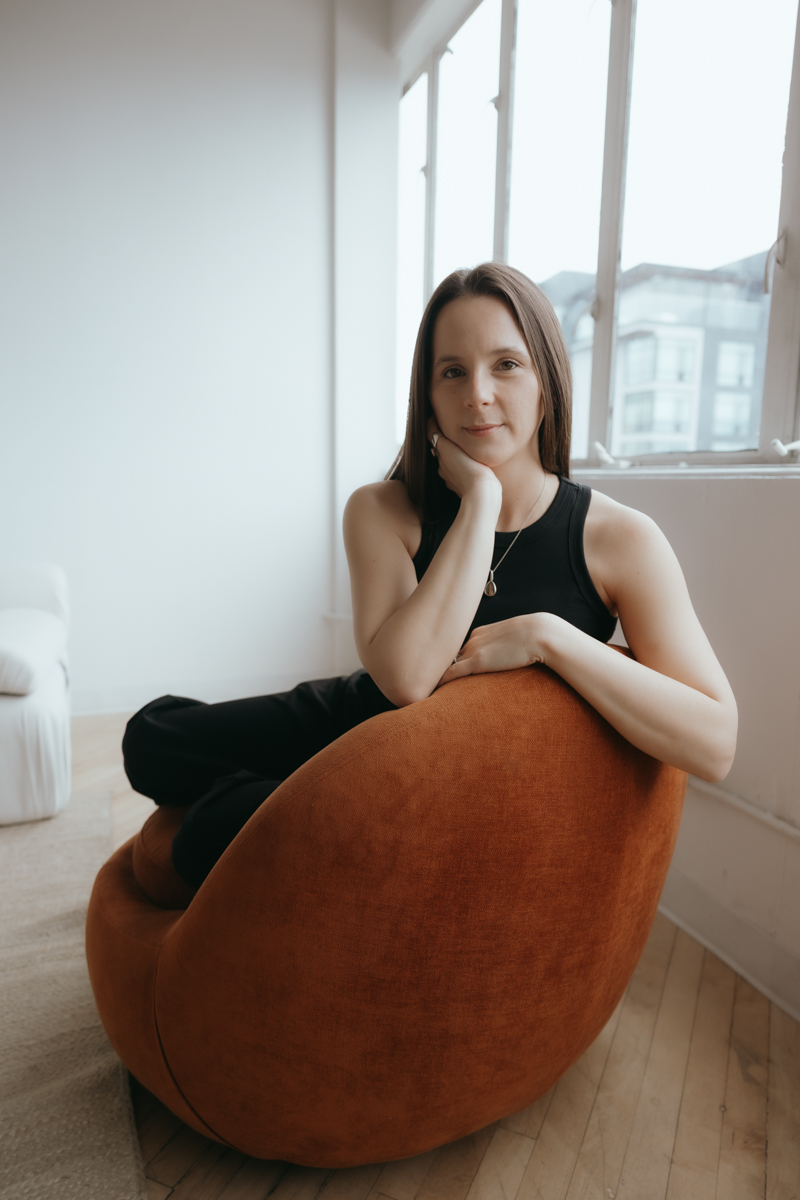
My photography is a blend of art, experience, and instinct, a little bit of this, a little bit of that. It started 22 years ago, the first time I stepped into a darkroom, a moment that sparked a lifelong pull toward capturing the world through a lens. That pull eventually led me into the fine art space, collaborating with artists, managing studios, and working alongside galleries and museums, studying art and photography through both undergraduate and graduate school, where my aesthetic developed under the influence of critical theory and contemporary art. I found myself drawn to the intersection of documentary photography and the spontaneous, unfiltered moments of real life. My goal has always been the same: images that are raw, honest, and deeply human.
I founded Teresa LoJacono Photography in 2013, and started experimenting with wedding photography in 2019, on purpose, and differently than what I’d been trained to expect from the industry. Travel plays a huge role in my creative process too, I find inspiration in the unfamiliar, letting light, movement, and emotion guide my eye. With a camera in hand, everything becomes a canvas and a chance to catch what’s actually happening, not what’s staged for it. If there’s one belief that’s driven all of it, it’s this: have fun, and let it be what it’s going to be. I’ll be there to catch whatever happens.


