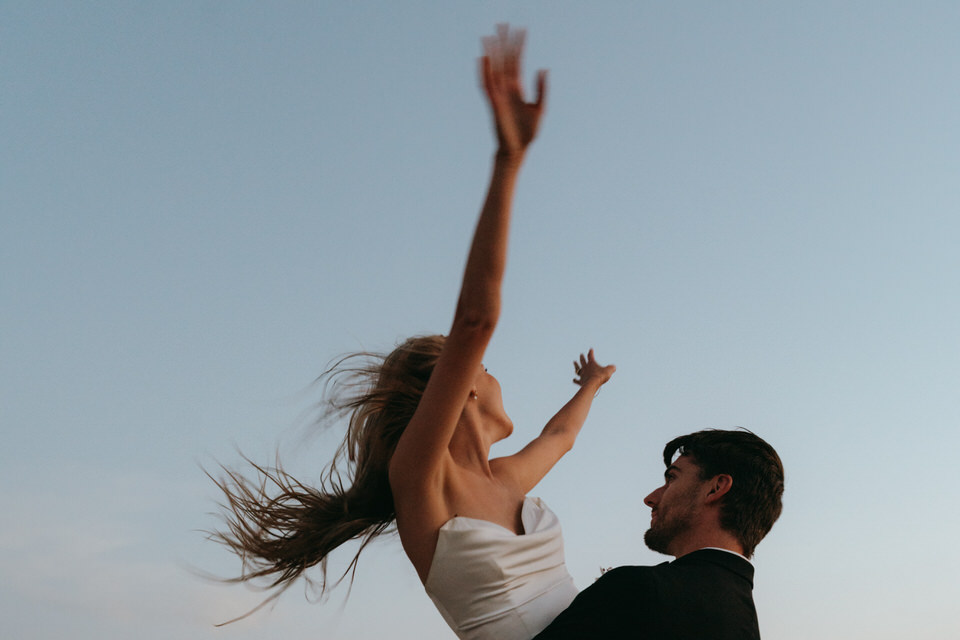
Palm Springs Windmill Elopement
A Palm Springs Windmill Elopement With a Classic Car
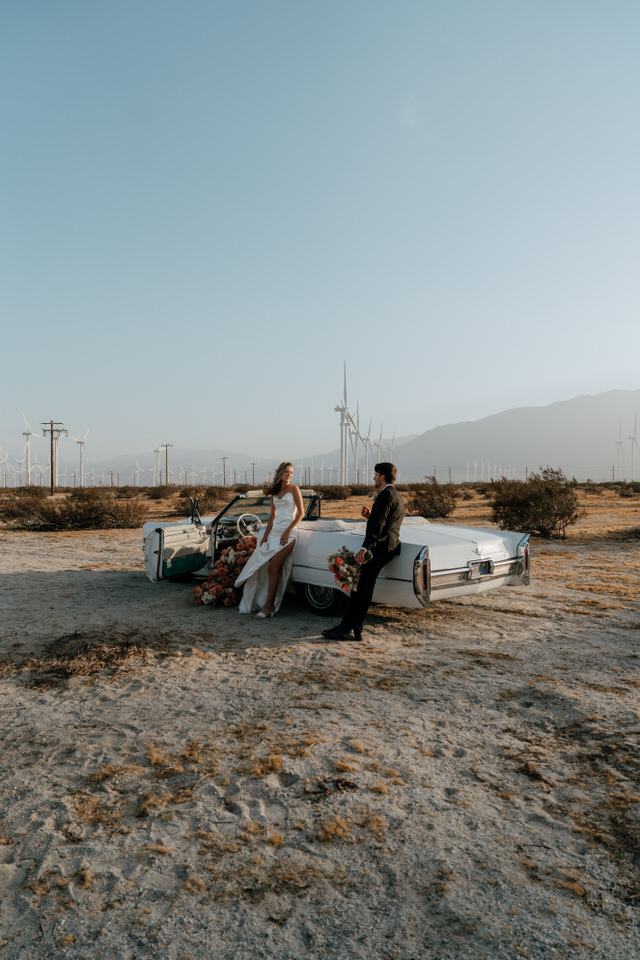
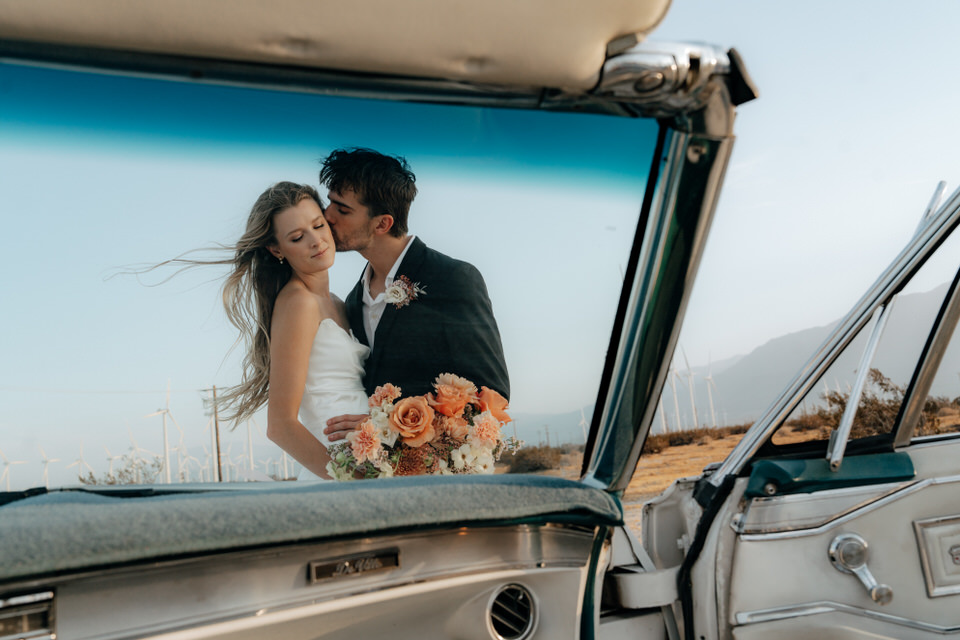
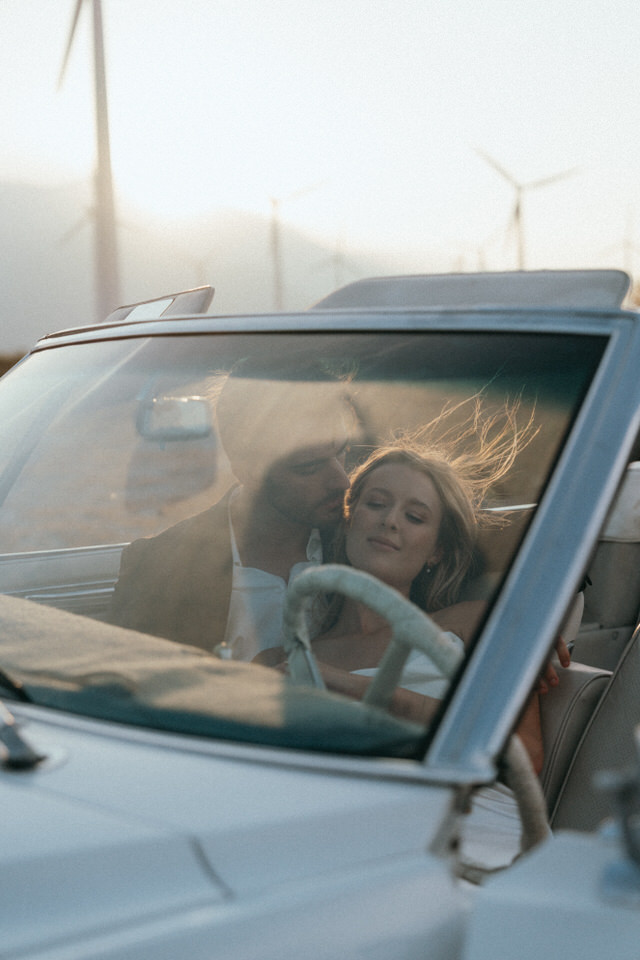
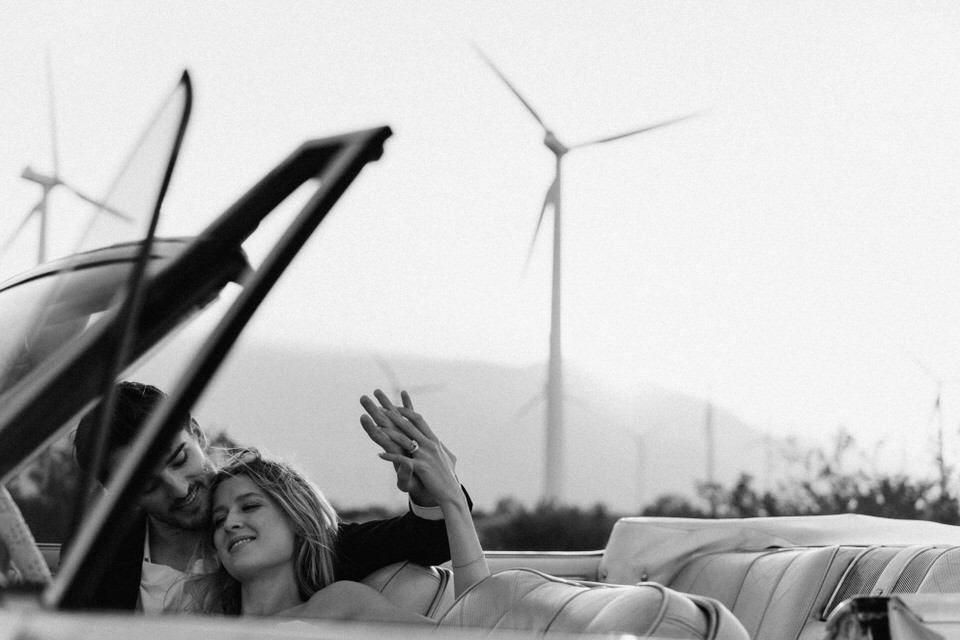
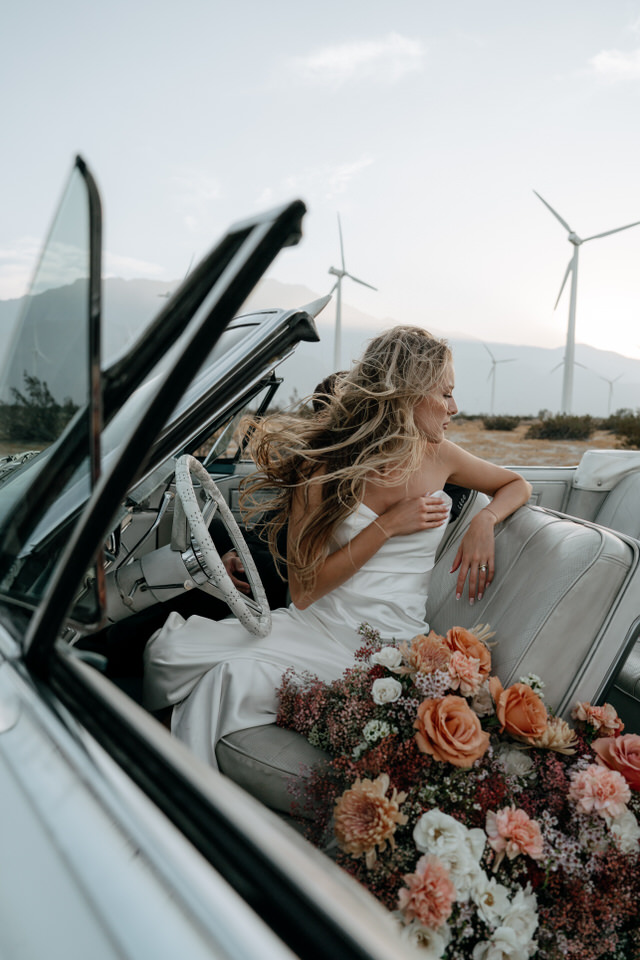
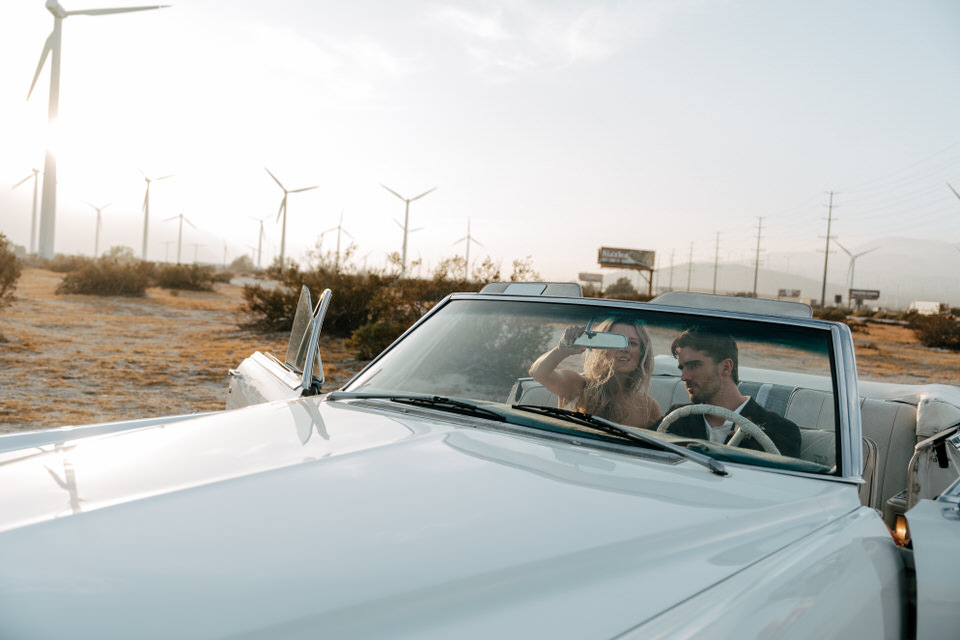
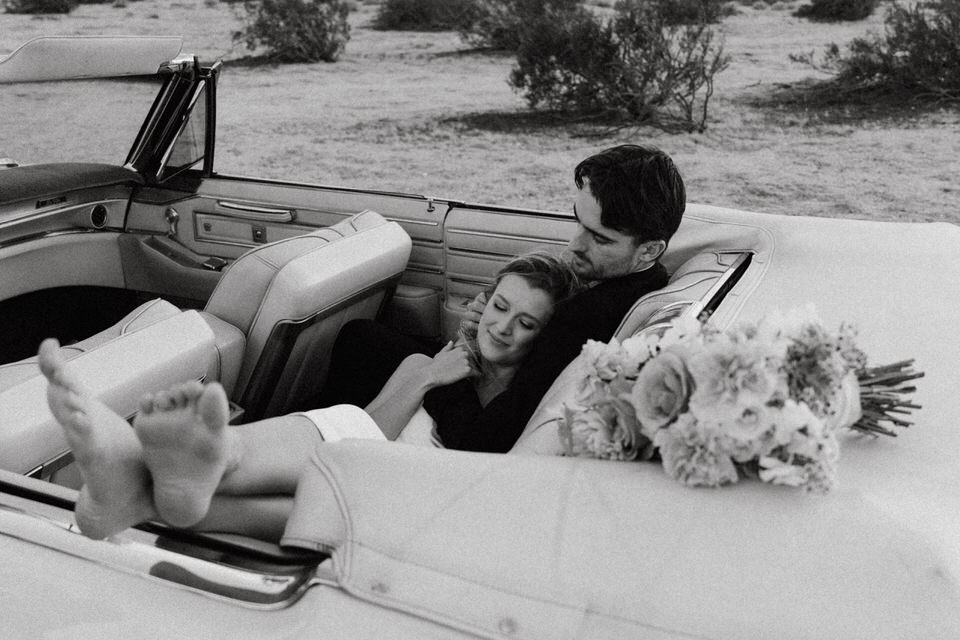
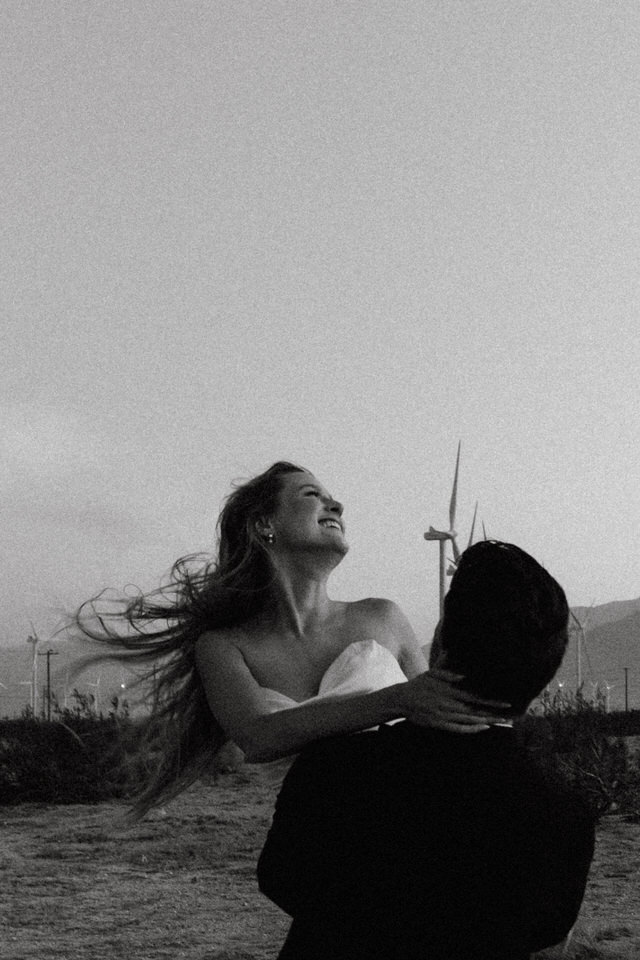
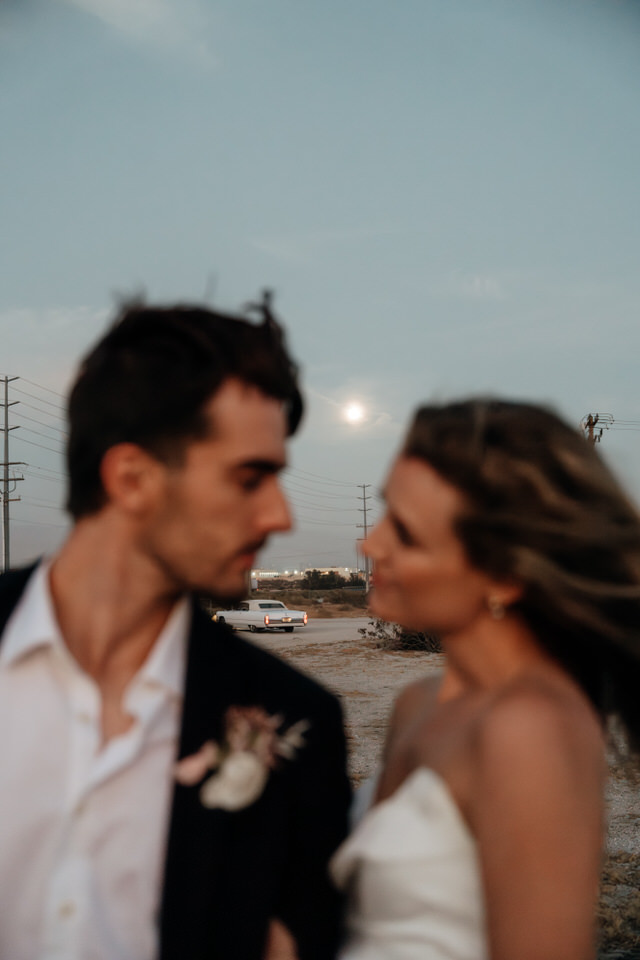
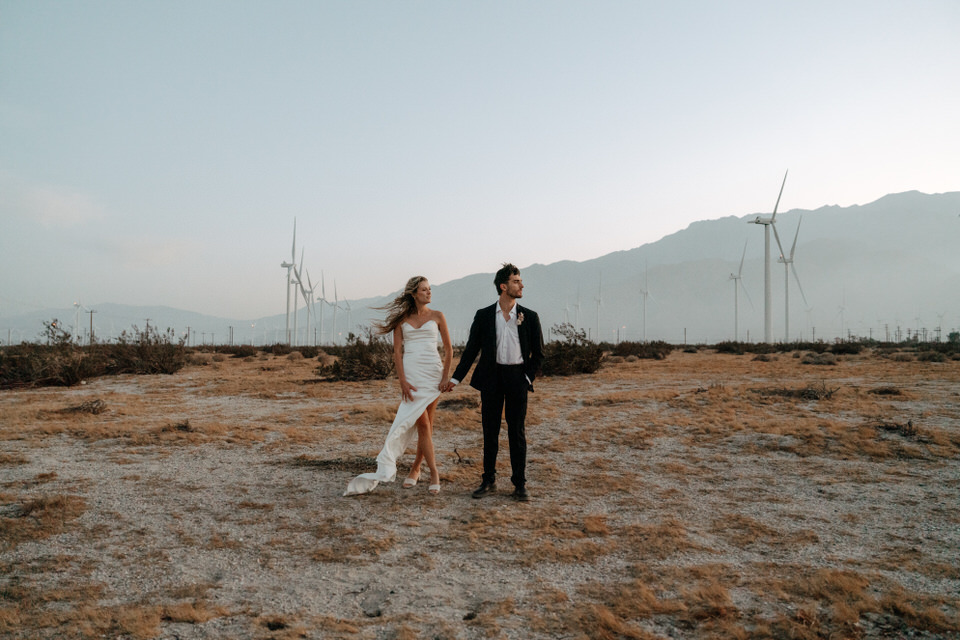
The Palm Springs windmills gave S&J the simple, open setting they wanted without making their portraits feel overly staged. We spent the session moving through the desert, using their vintage convertible as both transportation and part of the experience. Despite winds reaching more than 35 miles per hour, they stayed present and let the conditions become part of the photographs. My approach was naturally editorial, with direction when it helped and plenty of room for genuine interactions to unfold.


Why Choose the Palm Springs Windmills?
The windmills offer a minimal backdrop, desert, mountains, open sky, clean industrial lines. They work especially well for couples who want something visually distinct without leaning on decor or a highly styled setup. The location leaves space for movement, quieter interactions, and more intentional portraits. It also feels connected to Palm Springs without relying on the more familiar hotel pools or downtown architecture.
The Best Time of Year for a Palm Springs Windmill Elopement
Fall through spring generally gives the most comfortable temperatures for an outdoor session. Summer brings extreme heat, winter days can be mild but windy. Late afternoon usually offers softer light as the sun approaches the San Jacinto Mountains, but wind can pick up quickly. Build flexibility into the timeline and check the forecast throughout the week. Bring water, comfortable shoes, and an extra layer if the session runs past sunset.
If you’re curious how different light translates across landscapes, my Film vs. Digital: A Sunset Cliffs Couples Session post is a good contrast to this one.
How to Incorporate a Classic Car
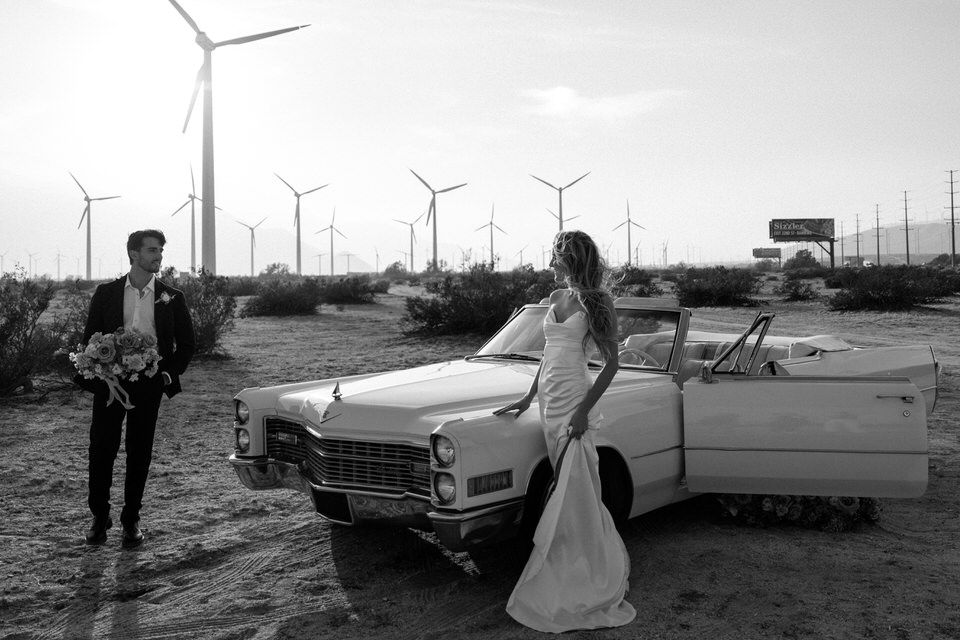
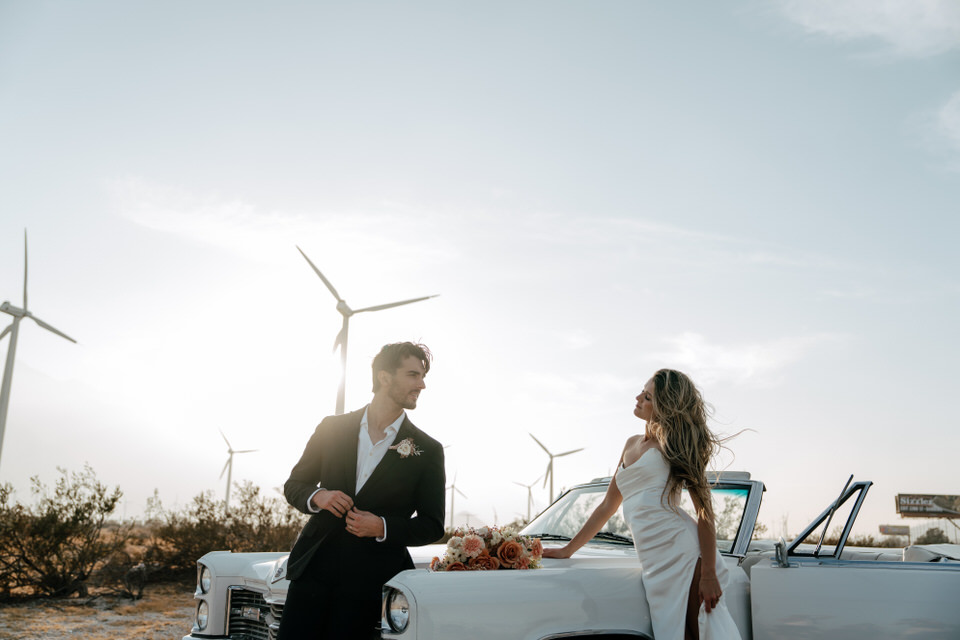
A convertible works especially well because it lets you interact with the landscape instead of just posing beside the vehicle. Use it for the drive, take a few portraits inside, and build in time to stop safely before sunset. Confirm whether the rental can go on sandy roads and whether photography is permitted.
Palm Springs Classic Cars A local company offering vintage and classic vehicles for weddings and photoshoots, including Cadillac, Lincoln, and Rolls-Royce models. Current inventory and rental details are on the Palm Springs Classic Cars website.
Coachella Valley Classic Cars A Palm Springs desert company renting classic vehicles for weddings, photoshoots, videos, and private events. Availability varies by vehicle, current options are on the Coachella Valley Classic Cars website.
Photography Tips for the Palm Springs Windmills
1. Take the Wind Seriously
The turbines are here because the San Gorgonio Pass gets powerful, consistent wind. This session had gusts above 35 miles per hour, and stronger conditions are possible. Choose clothing, hair, florals, and accessories that can handle movement. Loose veils and unsecured decor can become hard to manage. Wind can add energy to the photos, but plan for it as a real consideration, not an afterthought.
2. Decide Whether a Classic Car Fits the Experience
A classic car adds structure to the open landscape and gives you somewhere to sit and interact naturally. It can also become part of the overall Palm Springs experience. It also adds another rental, delivery window, and set of restrictions to manage. You don’t need one for strong photographs, the windmills carry enough visual interest on their own. Rent a car because you genuinely want to, not because you think the location requires it.
3. Plan Your Transportation Before Arriving
Palm Springs International Airport is the easiest option, about two miles from downtown. John Wayne Airport is roughly 90 minutes away, Los Angeles and San Diego airports are generally around two to two and a quarter hours away before traffic. Renting a car from one of the larger airports can turn the trip into a road-trip weekend, but build traffic and pickup time into the schedule.
4. Allow Time to Reach the Windmills
Common windmill viewing and photography areas sit north of central Palm Springs near Interstate 10. Drive time depends on the chosen location, but many recognizable roadside spots are roughly seven miles, or 10 to 15 minutes, from downtown. Traffic, blowing sand, and navigation can add time. Plan to arrive early enough to park safely, assess the wind, and walk to the portrait area without rushing.
5. Confirm Access and Permit Requirements
I’ve photographed from accessible roadside locations without being asked for a permit, but that shouldn’t be treated as a universal rule. Some wind farm areas beyond roadside fences are private property. The City of Palm Springs also requires permits for filming activity within city limits. Ceremonies, commercial setups, large groups, equipment, or private property access may need permission. Confirm the exact location with the city, county, or property owner before finalizing plans.
6. Consider Hybrid Film and Digital Coverage
The desert setting works especially well with film, the soft grain and open landscape complement each other naturally. Digital matters just as much when the light changes fast or the wind makes moments unpredictable. I use both based on the conditions and what’s actually happening rather than forcing every moment onto one format.
Other Palm Springs Portrait Locations Worth Considering
The windmills don’t have to be the only location on your timeline. Downtown Palm Springs offers midcentury architecture, clean streets, and hotel exteriors. Moorten Botanical Garden has dense cactus gardens and desert plant life. Indian Canyons and Tahquitz Canyon offer palm oases and mountain scenery, though entrance fees and photography rules may apply. Combining one architectural location with the open windmill landscape gives you variety without a long list of stops.
Where to Stay for a Palm Springs Windmill Elopement
Palm Springs has plenty of options close to downtown, most within a short drive of the windmills.
- The Saguaro Palm Springs, colorful, retro-modern, and centrally located, with a lively pool scene
- Ace Hotel Palm Springs, laid-back and design-forward, popular with couples who want a low-key basecamp
- Sparrows Lodge, a small, quiet property with a rustic, cabin-style feel
- Colony Palms Hotel, closer to a classic Palm Springs villa aesthetic, quieter and more intimate
- L’Horizon Resort and Spa, a higher-end option with private bungalows and mountain views
Confirm current rates and availability directly with each property, they shift seasonally.
Is a Palm Springs Windmill Elopement Right for You?
This location may be a good fit if you’re comfortable with wind, changing desert conditions, and a setting that feels more exploratory than formal. It works especially well for couples who value candid photographs, simple design, and time together over a heavily produced portrait session. You should also be comfortable walking across sand, adjusting plans when needed, and treating the windmills as a portrait destination rather than a full-service venue.
If that sounds like you, the Palm Springs windmills might be exactly what you’re looking for.
Let’s talk about your Palm Springs elopement
My Approach to Palm Springs Elopement Photography
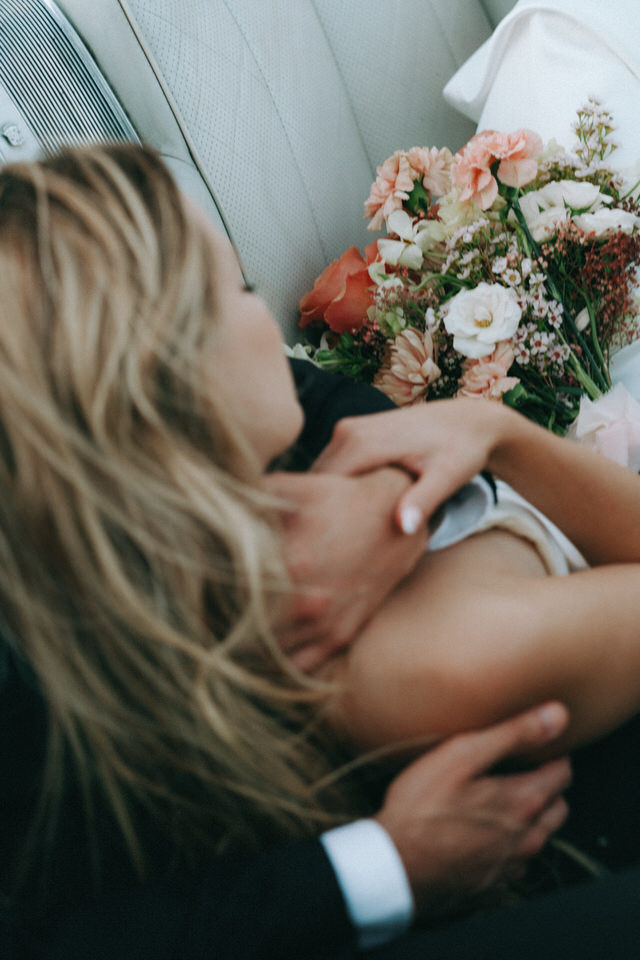
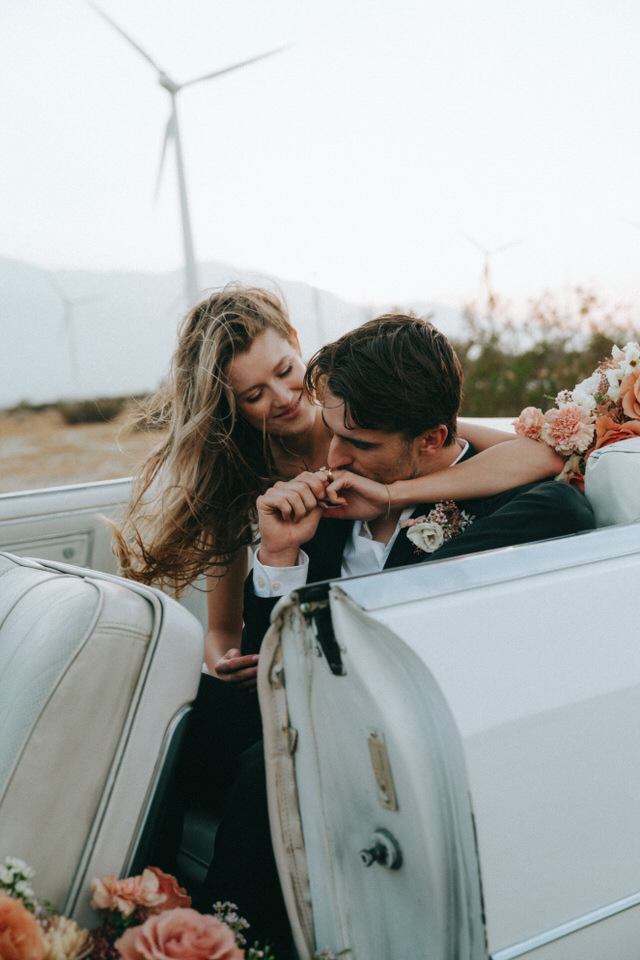
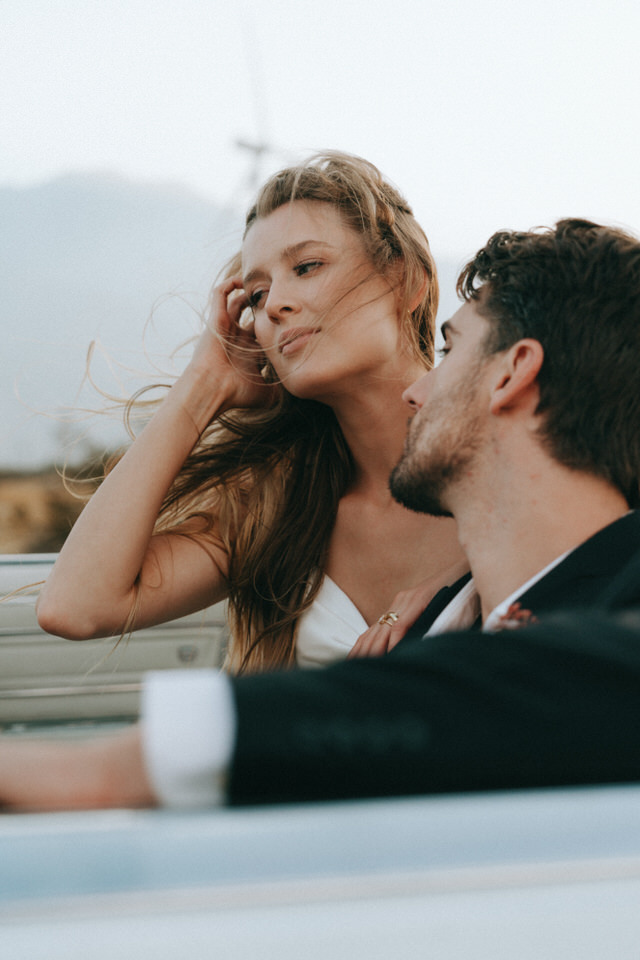
I photograph elopements with a documentary approach, letting the experience lead instead of turning the day into a photoshoot. I’ll step in with direction when it helps, particularly for portraits and difficult light, but I leave space for natural movement and interaction. Using film and digital together lets me work with the desert light as it changes, while keeping the photographs honest and connected to the people in them.
Frequently Asked Questions
What’s the best time of year for a Palm Springs windmill elopement? Fall through spring, for the most comfortable temperatures. Summer brings extreme heat, and winter can be mild but windy.
Do I need a permit to photograph at the windmills? Accessible roadside locations often don’t require one, but that’s not a universal rule. Some areas are private property, and the City of Palm Springs requires permits for filming activity within city limits. Confirm the exact location before finalizing plans.
Do I need to rent a classic car? No. It adds a distinct look and an extra layer to the experience, but the windmills carry enough visual interest on their own. Rent one because you want it, not because the location requires it.
Do you shoot on film, digital, or both? Both, depending on the light and what’s happening in the moment. Film adds texture in the open desert light, digital keeps up when conditions change quickly.
Meet Your Palm Springs Elopement Photographer
I’m Teresa LoJacono, a California documentary wedding photographer working throughout San Diego, Palm Springs, Los Angeles, and the Central Coast. It started 22 years ago, the first time I stepped into a darkroom, and I started experimenting with wedding photography in 2019, on purpose, and differently than what I’d been trained to expect from the industry. I photograph on film and digital for couples who want to stay present and receive an honest record of their experience. If you’re planning a Palm Springs windmill elopement and want candid coverage with thoughtful direction when needed, I’d love to hear what you’re planning.
Inquire about your Palm Springs elopement today
Looking for an elevated desert location instead? La Quinta Resort in Palm Springs may be the answer.

My photography is a blend of art, experience, and instinct, a little bit of this, a little bit of that. It started 22 years ago, the first time I stepped into a darkroom, a moment that sparked a lifelong pull toward capturing the world through a lens. That pull eventually led me into the fine art space, collaborating with artists, managing studios, and working alongside galleries and museums, studying art and photography through both undergraduate and graduate school, where my aesthetic developed under the influence of critical theory and contemporary art. I found myself drawn to the intersection of documentary photography and the spontaneous, unfiltered moments of real life. My goal has always been the same: images that are raw, honest, and deeply human.
I founded Teresa LoJacono Photography in 2013, and started experimenting with wedding photography in 2019, on purpose, and differently than what I’d been trained to expect from the industry. Travel plays a huge role in my creative process too, I find inspiration in the unfamiliar, letting light, movement, and emotion guide my eye. With a camera in hand, everything becomes a canvas and a chance to catch what’s actually happening, not what’s staged for it. If there’s one belief that’s driven all of it, it’s this: have fun, and let it be what it’s going to be. I’ll be there to catch whatever happens.


